Possible New Horizons for Social Housing in Mexico
Programa Construyes del Gobierno Federal.
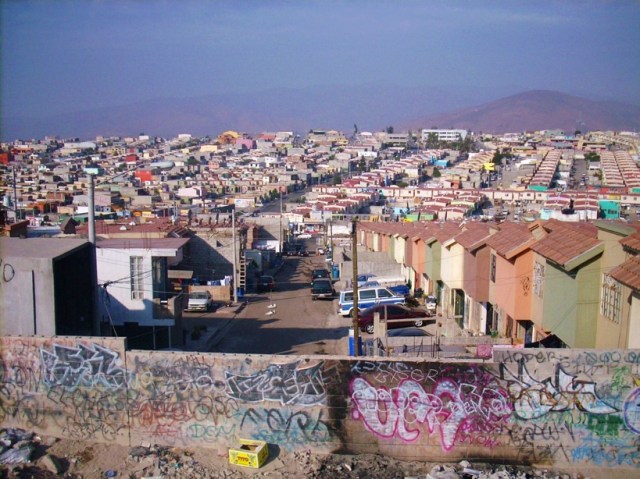 |
| Villa Fontana, Tijuana. Image; Rene Peralta |
Today the Mexican Federal Government presented a housing program titled ConstruYES!, allowing working-class citizens to self-build their own house. By utilizing a direct credit through the government, citizens will be able to have access to a construction loan to build a house on a piece of property they own (legally). This is unprecedented since low-income families have not previous;y had the chance to participate in the financial life of the economy, specifically the access to low-interest loans for home construction. According to a study by COLEF “…having a property title appears not to change the financial patterns of families very much. In Mexico among families whose income total less than six monthly minimum wages, only 10% made use of loans to invest in their homes”
(Alegria & Ordoñez, 2016).
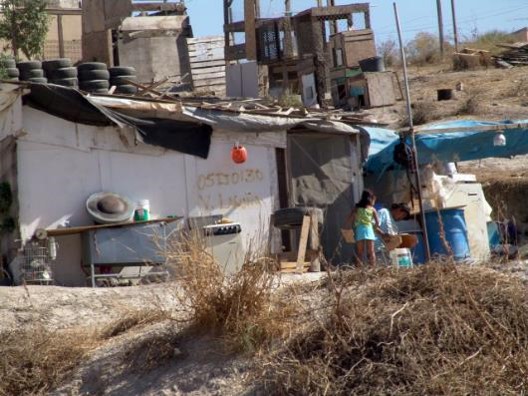 |
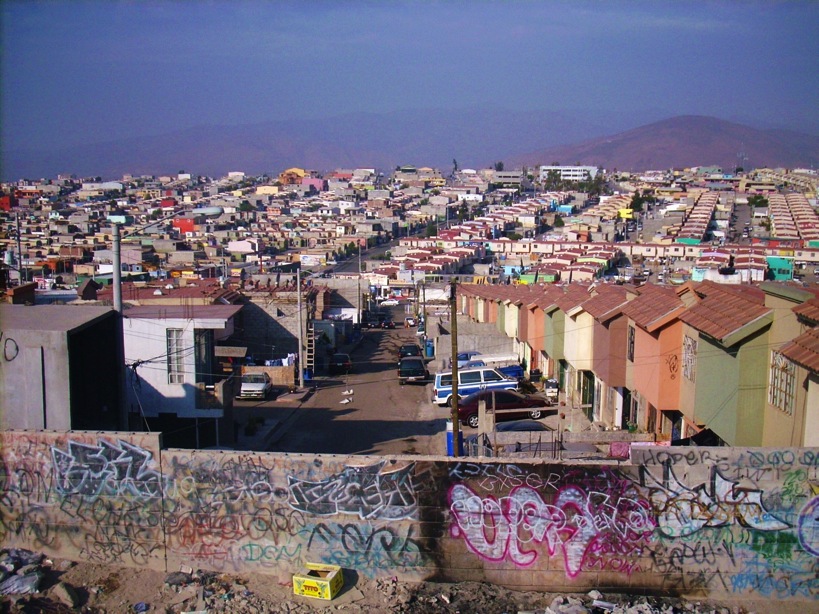
| Tijuana Informal House: Image Rene Peralta |
This new program will require an assistance component where a construction licensed professional would be part of the project’s development phases. According to the federal housing administration, this program will allow the building of more dignified housing and permit the overall improvement of areas that have developed social and community networks, and have public services and are near to transportation. It will also dramatically change how working-class housing has been developed in the last 40 years – via the private sector development companies who have demonstrated a profit first over people system in secluded and micro-housing developments.
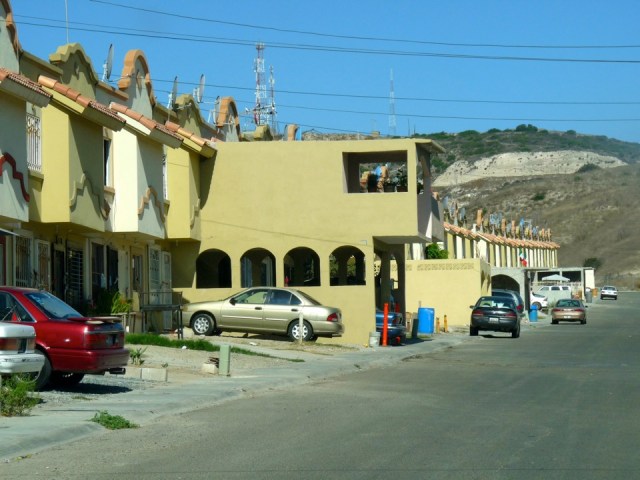 |
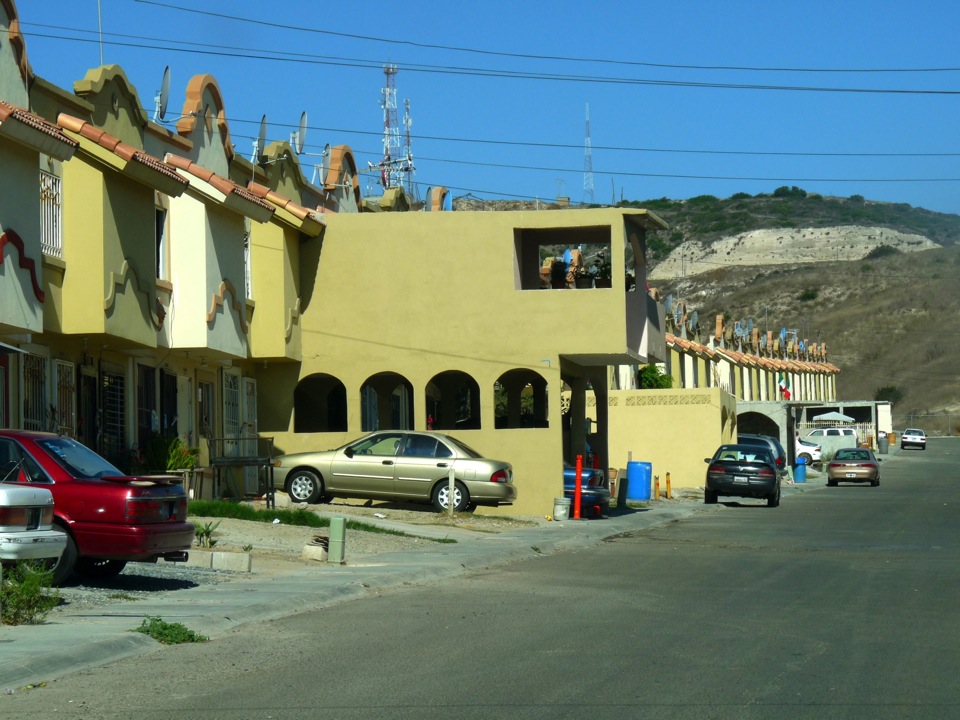
| Developer Housing Tijuana. Image: Rene Peralta |
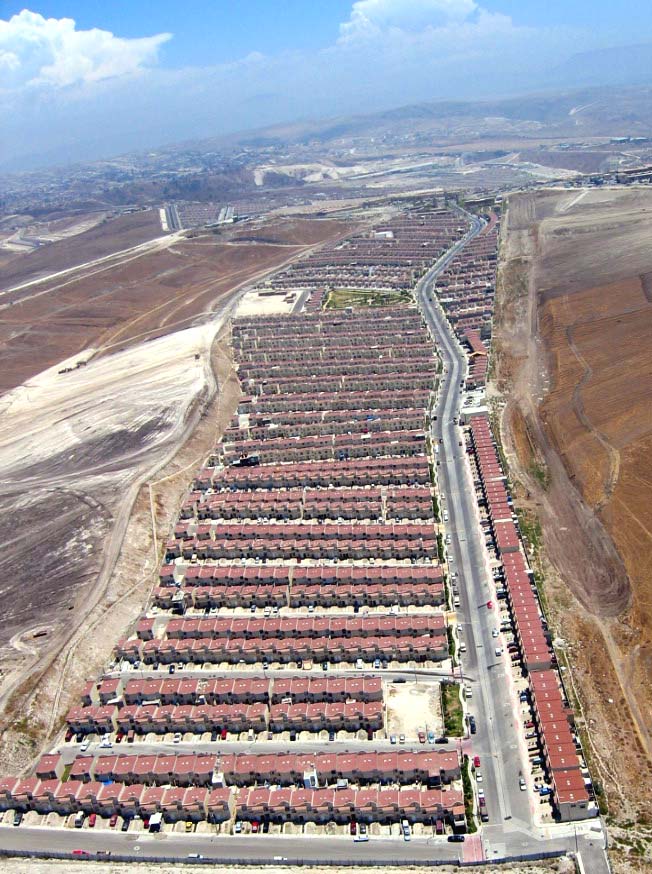
In Mexico, it is estimated that 70% of the population self builds its own home with traditional materials such as concrete blocks or brick, and in some instances with second-hand timber from other construction sites or even other countries as is the case of cities along the US/Mex border. Yet many of these houses lack construction supervision by a professional or government agency, they are fragile constructions that do not hold up well in harsh climates and lack well maintained electrical and plumbing systems. Also, the only options provided to the working-class population had been the developer micro-sized units that did not abide by the size of a common Mexican family, creating segregated and overcrowded horizontal ghettos around the major cities in the country.
 |
| Developer Housing Tijuana. Image: Rene Peralta |
The success of the program will rely on the combination of the no-hands – no intermediary loan system and getting the population the right technical assistance for the design and construction integrity of their home. Self-built housing initiatives use local labor and purchase most materials from within their neighborhoods making the practice a more sustainable method for local businesses and trades. Yet, it can go awry if the technical assistance is not the appropriate one causing physical damages to structures endangering lives. Local codes must be followed especially ones dealing with all the structural and seismic phases of the construction. The turnaround of building permits for this type of construction must be expedited and relatively inexpensive for the program to be successful, this means that communication between the city, state, and federal government beyond political party bickering, is an integral part of the program’s success.
There will be a push back from construction companies and developers who are accustomed to being the ones building the government’s social housing stock. However, this can be an opportunity for these companies to bring to the market innovative construction materials and methods that are simple to build and require minimal technical expertise. Prefabricated homes and 3d printed systems can be deployed to communities to enhance and expedite the construction process and architects have the opportunity to experiment with innovative housing ideas of mass customization.
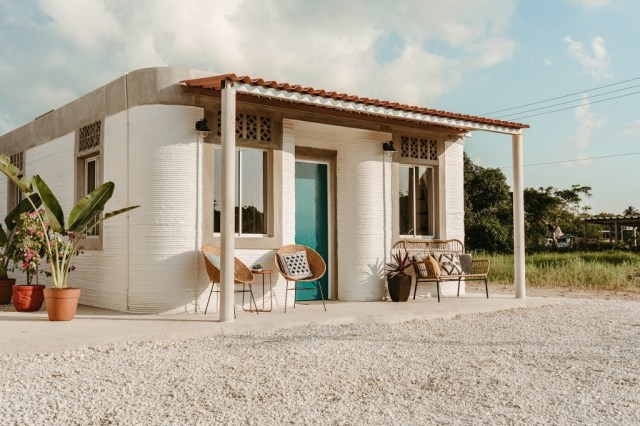 |
| 3d Printed House in Tabasco, Mexico. Image Joshua Perez |
In the border city of Tijuana, the non-profit organization Fundacion Esperanza de Mexico, A.C. http://www.esperanzademexico.org (FEM) has been undertaking community development programs and self-built housing initiatives for 30 years. FEM’s model is very similar to the new government program, using local materials/labor to build homes along with families and volunteers. FEM also has a technical office that aides with the design, construction documentation, and permit processing are all supervised by the in-house registered architect. The program that FEM promotes relies on groups of families located in specific communities of the city, coming together to organize a housing saving fund were they deposit a certain amount of cash every week. This community fund then continues to operate with new families as the first homes are built, producing a revolving all-cash fund to support future construction. This has given FEM a certain autonomy from banks, lending institutions, and high-interest loans that families normally might not even have access to. FEM homes are designed as a complete project yet they are built in phases allowing the families to maximize their cash flow and not be a burden on daily living expenses. All FEM houses retain their value, are designed specifically with each family’s needs, and more importantly, it’s a process to build dignified homes and strengthen community ties through a self-help system and education program led by a FEM social worker with vulnerable families in working-class communities.
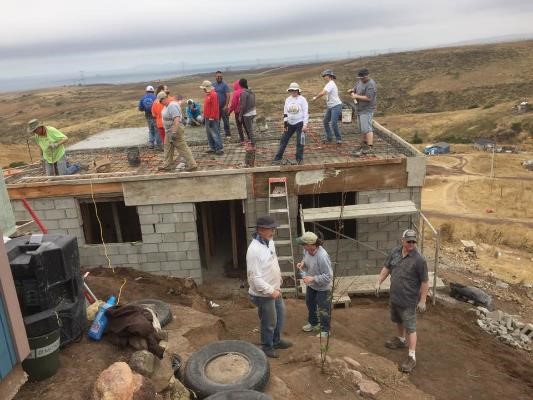 |
| House being built under the FEM program in Tijuana, Mexico. Image FEM |
I will continue to research the forthcoming government programs and attempt to evaluate their future impact, because I believe if it is done correctly it can be a game-changer, a democratic and real way to house a community.
.
As the poet Gaston Bachelard once wrote, “For our house is our corner of the world. As has often been said, it is our first universe, a real cosmos in every sense of the word.”
Rene Peralta, Lecturer
Herb Greene Teaching Fellow
Christopher C. Gibbs College of Architecture
University of Oklahoma


 Pensamientos Genericos
Leave a comment